
Demcon's record test for the SMART project (Source of MedicAl RadioisoTopes) brings nuclear medicine radioisotopes closer to steady supply. Old reactor output is less reliable, so cancer patients can wait longer for diagnosis or therapy while their health gets worse. The SMART project, led by the Belgian Institute of Radio Elements (IRE) with support from ASML, aims to build a stable route with beam tech. It is also a step toward precision medicine and better patient delivery. Demcon's engineering consultancy helped turn the lab idea into a test plan, and the work is a clear case of nuclear medicine engineering.
A key part of the project is the target. It must take extreme heat and radiation and still fit the current generator chain. In early February, a dedicated team led by IRE showed that liquid metal cooling works for this target. The test set a world record for power density and marked a major step toward the SMART factory.
The need for reliable radioisotopes
Millions of cancer patients depend on nuclear medicine, the use of medical radioisotopes for imaging and therapy. Medical radioisotopes are short-lived nuclear substances.
Their output still depends on aging reactors that use uranium as feedstock. These sites are no longer reliable, yet production must run nonstop because the isotopes decay fast. Any break can hurt patient delivery for precision medicine.
SMART project
A new way to make 99mTc
Technetium-99m (99mTc), made from its parent isotope 99Mo, is the main radioisotope for diagnosis in nuclear medicine. The idea for a new production route came from an unexpected place. While studying free-electron lasers (FELs) as extreme UV light sources for new lithography, ASML realized that electron accelerator technology could be used to produce 99mTc (FEL-based EUV generation was abandoned later).
International collaboration
IRE, the world’s largest supplier of medical radioisotopes, had started the SMART project and teamed up with ASML to turn this idea into a commercial production facility. IRE leads an international collaboration of over 25 research institutes and high-tech companies, including technology developer and producer Demcon, working on the sustainable and reliable production of radioisotopes using accelerator technology, while maintaining compatibility with the current downstream supply chain – the so-called generators.
Electron accelerator
Production concept
In the new concept, 99Mo is made by irradiating non-radioactive molybdenum-100 (100Mo) with a strong beam of accelerated electrons. Compared with conventional production with nuclear reactors, this route needs no enriched uranium and makes very little long-lived nuclear waste.
Large-scale output
Current electron accelerators used in this field do not meet the specifications for large-scale production of 99mTc for nuclear medicine with the current generators. That requires a superconducting, high-power linear electron accelerator. The accelerator fires high-energy electrons on the target composed of 100Mo-enriched molybdenum, which is then transformed into 99Mo. After irradiation, the target is processed and distributed globally in the form of so-called generators. At the hospitals, the 99mTc – that is used for imaging, is harvested from those generators.
Extensive cooling required
IRE commissioned Demcon to develop the exposure unit, including the target, and the harvesting system.
Target design challenge
One of the biggest challenges was the design of a target that can survive the extreme heat load and radiation injected by the electrons, Johannes Jobst, senior mechatronic system engineer, explains. “To be compatible with the current generator technology, the initial activation must be high enough. This level of activation requires focusing the 3MW beam on a target no larger than a matchbox. Without extensive cooling, the target would evaporate instantly. Only liquid metal provides sufficient cooling power, due to a high specific heat capacity and conductivity. After investigating several solution scenarios liquid sodium was chosen as the coolant for the SMART factory. However, it is flammable and corrosive, which makes it difficult to handle.”
Successful tests
Demonstrating sodium cooling
In theory and in simulations, sodium cooling is an effective method, Bas Vet, senior mechatronic system engineer, says. But the intense beam pushes heat stress and radiation damage to the edge of what the strongest materials can take. To prove the target could survive, the team built a 1:1,000 model of the SMART exposure unit. As the SMART electron machine is still under development, they searched for sites that could host the test.
Testing at Helmholtz Zentrum Dresden-Rossendorf
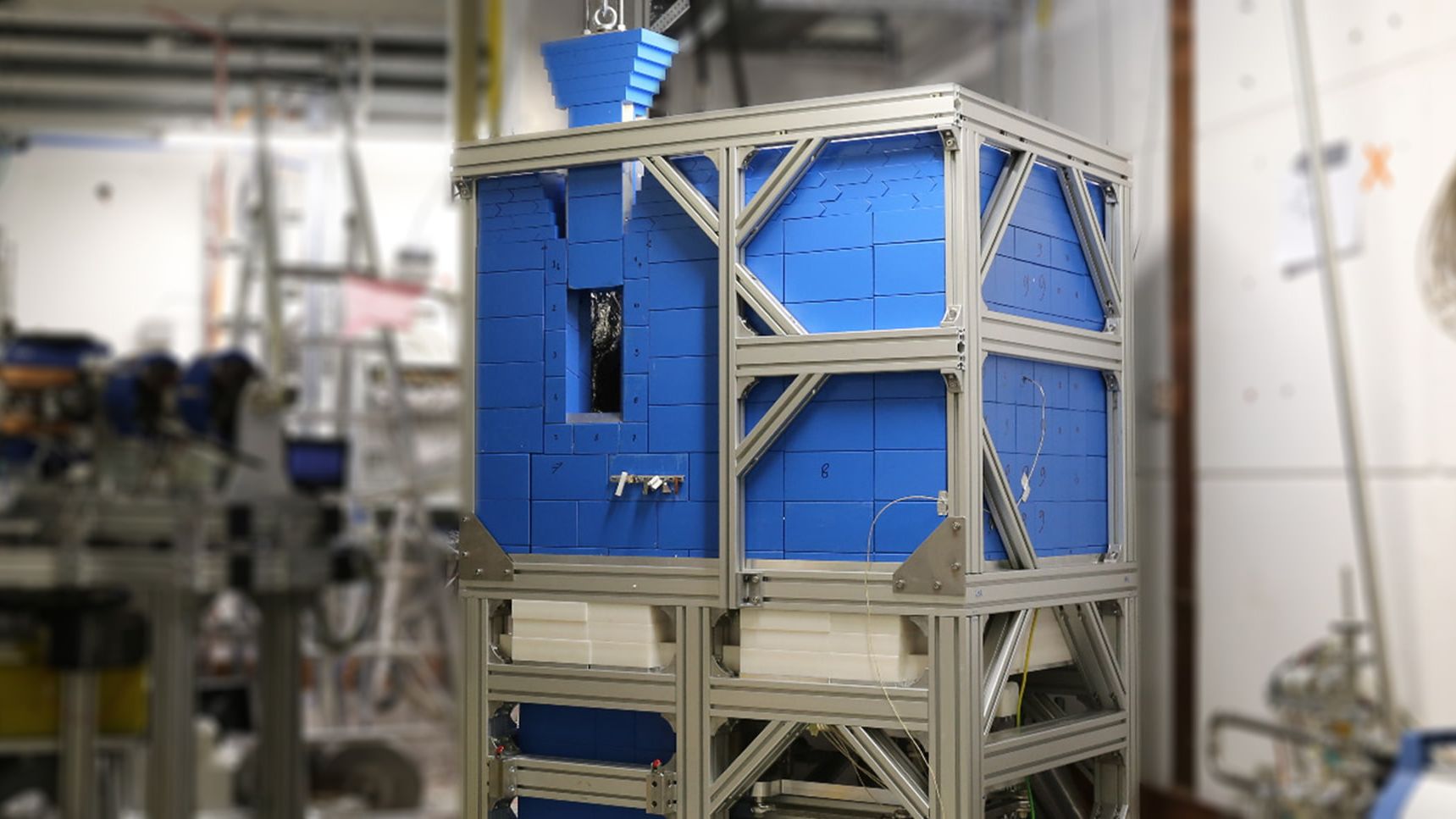
Only a few places in the world could provide a beam strong enough for this test. Helmholtz Zentrum Dresden-Rossendorf was keen to give access to its ELBE electron machine and run the experiment. From 1 to 5 February, the team used the site for 115 hours with a 30 kW beam. The on-scale target survived the extreme test.
World record
With the test done, a world record was set, Vet says. No one had tried to put so much power per unit volume into a target nonstop for days while keeping it intact. For comparison, the team puts nine orders of magnitude more power density into the target than the solar core does.
Market entry
The SMART project reached a key milestone, and one of the main technical risks has been cut, Demcon project manager Ricsi Horvath says.This was a group effort by a large team working on the mini-target under IRE's lead and ASML's technical guidance. Over the past two years, more than 150 people at Demcon, plus over ten regional contractors and six international partners, helped make the test a success. Challenges remain in radiation sensitivity and damage, cooling, and shielding, but the main risk is now under control.
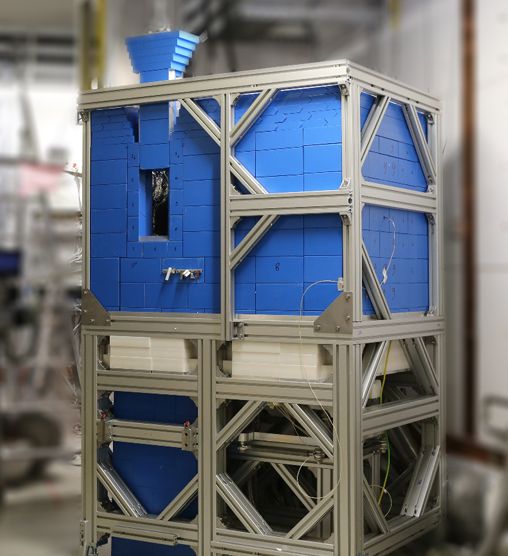
Photo: Test setup for SMART project at Helmholtz Zentrum Dresden-Rossendorf
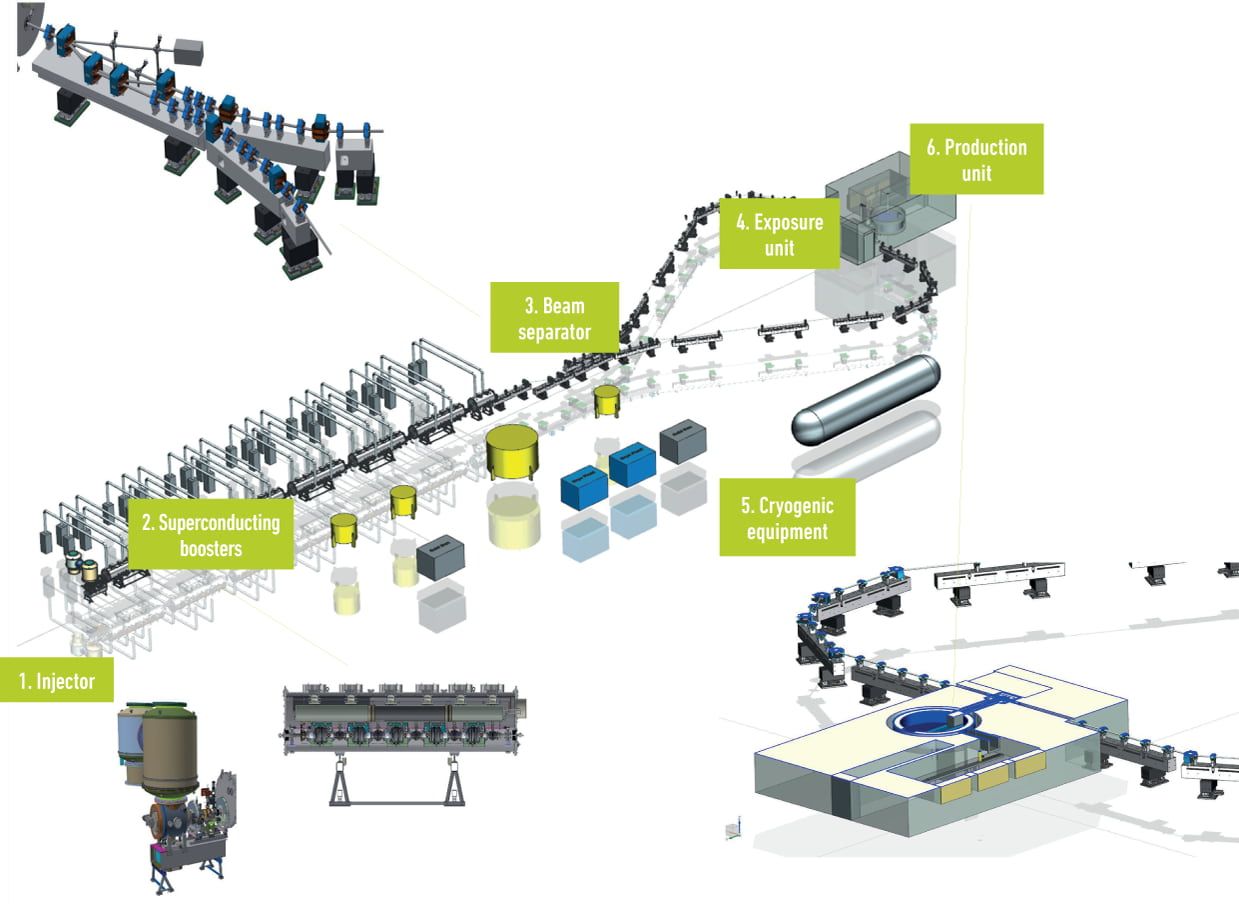
Photo: Factory development for M0-99m production
More information
For more information, please contact us using lsh@demcon.com